
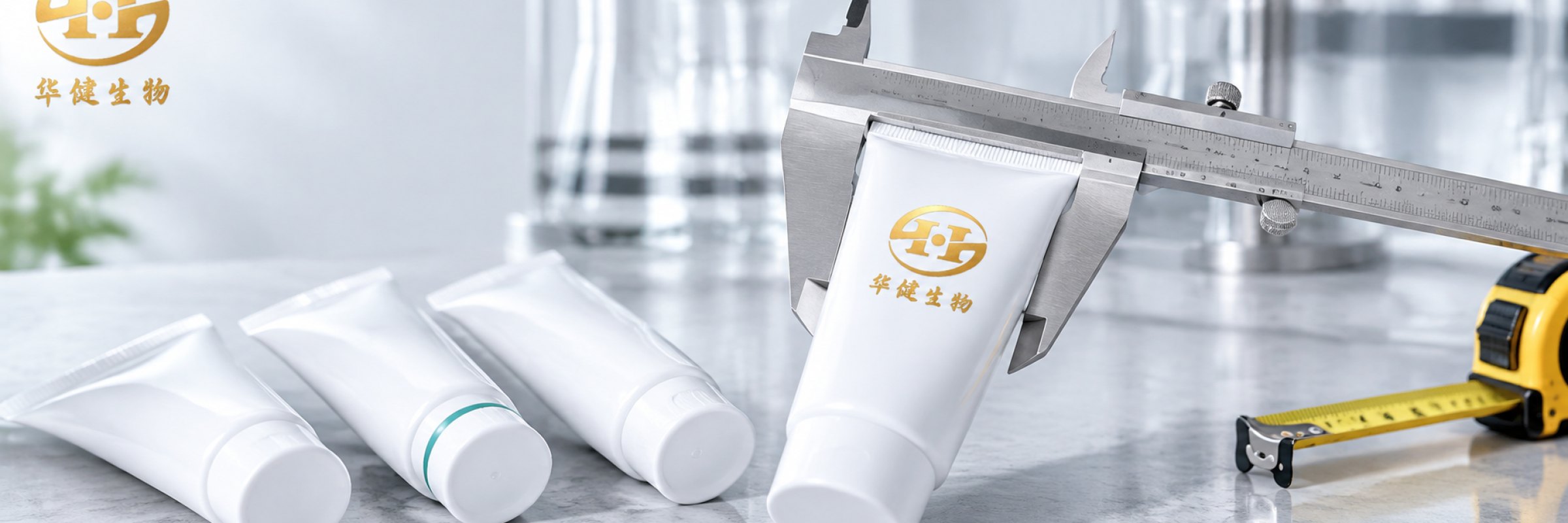
Tube and Pack Size Chart (Diameter, Fill, Carton)
Every packaging quote is really a size quote. This chart converts tube diameter, fill weight and carton count into the figures you need to plan a run.
Use it to check that the tube, cap and carton a supplier quotes will fit your filling line — then put the accepted range in writing.
Tube and Pack Size Chart (Diameter, Fill, Carton)
https://huajiandental.com/packaging-size-chart/ · November 12, 2026
Travel and sample formats
The short end of the range| Format | Tube diameter | Fill volume | Typical use |
|---|---|---|---|
| Travel tube | Ø19 mm | 10 g | Hotel amenity and airline kits, packed in bulk cartons |
| Sample tube | Ø19 mm | 15 g | Sampling and gift-with-purchase, filled on the same line |
| Mini tube | Ø22 mm | 20 g | Trial size for e-commerce bundles and subscription boxes |
| Squeeze tube | Ø22 mm | 30 g | Pharmacy trial and travel retail |
Tube diameter, fill and carton count
| Tube diameter | Standard fill | Pieces per carton | Carton size (L × W × H) | Typical use |
|---|---|---|---|---|
| Ø19 mm | 25 g | 200 | 40 × 30 × 25 cm | Travel, hotel amenity and sample tubes — the lowest packaging cost per unit |
| Ø22 mm | 50 g | 150 | 44 × 33 × 27 cm | Retail 50 g and trial sizes; the most common entry SKU for private label |
| Ø25 mm | 75 g | 120 | 48 × 36 × 30 cm | Mainstream 75 g — the volume format in most export markets |
| Ø30 mm | 100 g | 100 | 52 × 40 × 32 cm | Family and value packs; more shelf presence for the same fill weight |
| Ø35 mm | 100 g | 100 | 56 × 42 × 34 cm | High-viscosity n-HA paste and wide-mouth designs that need a bigger bore |
Four diameters that cover most briefs
When in doubt, sample these| Tube diameter | Standard fill | Best for |
|---|---|---|
| Ø19 mm | 25 g | Travel, hotel amenity and sample tubes — the lowest packaging cost per unit |
| Ø22 mm | 50 g | Retail 50 g and trial sizes; the most common entry SKU for private label |
| Ø25 mm | 75 g | Mainstream 75 g — the volume format in most export markets |
| Ø30 mm | 100 g | Family and value packs; more shelf presence for the same fill weight |
Reading the chart
Diameter is not a fill weight
Two Ø25 mm tubes can hold different amounts, because fill volume is set by the tube length as well as the diameter. Net content is declared by weight, and the figure on the carton is the minimum, not the average — so agree the fill weight and the ±2% filling tolerance separately from the tube format.
The carton is built around the tube
Pieces per carton follow from the tube diameter and the outer-box footprint, not from the artwork or the formula. Moving a SKU from Ø25 mm to Ø30 mm changes the carton count, the container loading and therefore the freight per tube. Lock the format before you approve a design, not after.
Ordering by the carton
Tubes are quoted and shipped per carton, so round up before you price. 1,000 tubes at 120 per carton is 8.33 cartons — you will be invoiced for nine. When you compare quotes, compare the price per carton and the price per tube, never the line total: the same line total at a different quantity is a different unit price.
Print area and artwork clearance
A Ø19 mm tube has roughly a third of the printable area of a Ø35 mm tube, and the laminate takes print slightly differently at each diameter. Keep critical elements away from the crimp and the shoulder, and set the position tolerance in writing — use the print tolerance calculator to turn a quoted figure into an inspection band.
Sources & methodology
- Carton counts and outer-box dimensions are the figures tube suppliers quote for tubes standing upright with caps fitted, including 3–5 mm clearance per side.
- Fill volumes are declared net content; the filling tolerance at the head is normally ±2% by weight.
- ISO 11609 covers toothpaste requirements, test methods and labelling. Packaging dimensions are not standardised and vary by supplier, so treat this chart as a planning reference and confirm on the specification sheet.
- Diameters listed are the common laminate and plastic tube formats traded in export volumes, not every size a factory can make.
Need a number for your own specification?
Send us the formula base, the fill size and the quantity. We will come back with stock, pricing and lead time — and ship samples so you can test them yourself.